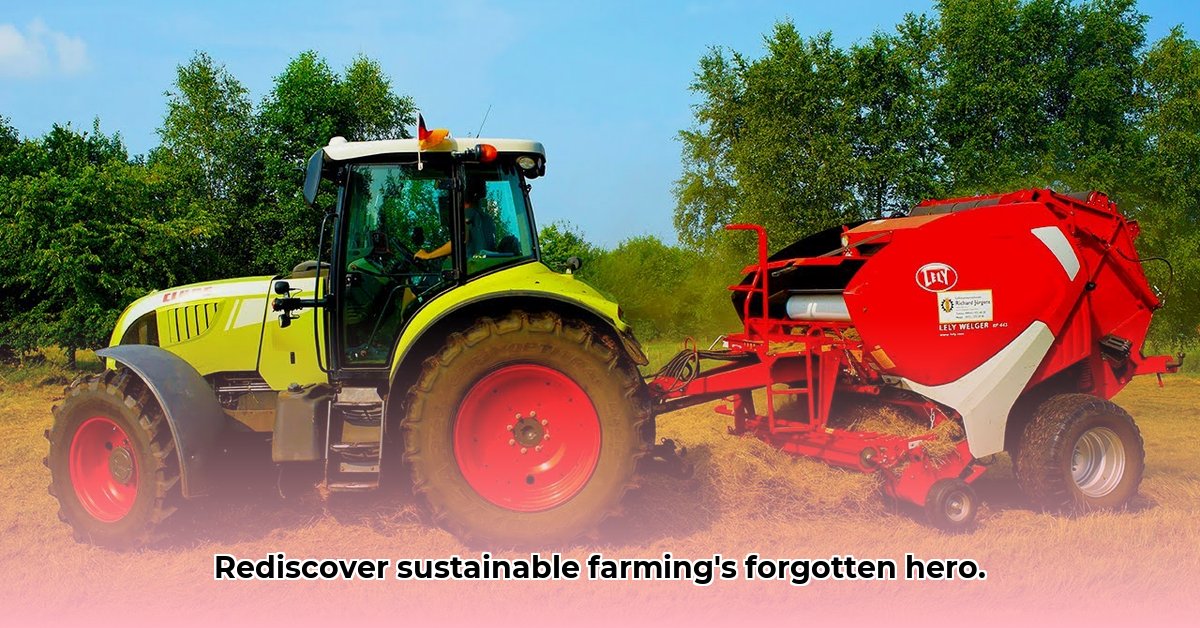
Harry Tractor Trekker: A Twin-Engine Tractor's Tale and the Search for Sustainable Farming
Imagine a tractor so powerful, it boasts two engines. This isn't science fiction; it's the reality of Harry Lee's 1956 Garrett Twin Drive 400 IHC, a behemoth of a machine that's as much a piece of agricultural history as it is a testament to the enduring quest for sustainable farming. This article explores the Twin-Drive's unique design, its surprisingly relevant lessons for modern agriculture, and Harry Lee's remarkable dedication to preserving it. For more on powerful tractors, check out this link to other tractor.
Under the Hood of a Double-Duty Machine
The Garrett Twin Drive 400 IHC was a marvel of engineering, featuring two powerful engines working in concert. This design offered unparalleled power, capable of plowing through the toughest terrain with ease. But this brute strength came at a cost—both financially and environmentally. The complex mechanics demanded specialized knowledge and parts, making maintenance a significant undertaking. This raises a crucial question: did the increased power offset the higher maintenance demands and environmental impact?
Fuel: A Double-Edged Plow
The Twin Drive's twin engines had a significant appetite for fuel. This raises a critical question: was the increased power truly more efficient than a single, modern engine? While the tractor's raw power was undoubtedly impressive, the lack of precise historical data on its fuel consumption complicates a straightforward comparison to today's more fuel-efficient models. This knowledge gap highlights the importance of thorough data collection when assessing the environmental impact of historical agricultural machinery.
Tilling the Earth: The Weight of Progress
Weighing in at a hefty 15,380 pounds, the Twin-Drive presents another crucial dimension to this sustainable farming discussion: soil compaction. While its weight provided stability, it also significantly compacted the soil. This compaction hinders water absorption, root growth, and overall soil fertility—directly contradicting the principles of sustainable agriculture, which prioritize soil health. The Twin Drive's legacy is therefore intertwined with the broader environmental consequences of heavy machinery.
Harry's Heart: Preserving the Past, Shaping the Future
Harry Lee's dedication to restoring and maintaining his Twin-Drive is remarkable. His passionate preservation of this historical machine highlights the importance of preserving agricultural heritage, learning from the past, and fostering more sustainable practices for the future. His hands-on approach makes the legacy of the Twin-Drive more than just a display piece - it's a living lesson.
A Look Back, a Leap Forward: Then and Now
Comparing the Garrett Twin Drive to modern tractors reveals a stark contrast in efficiency and sustainability:
| Feature | Garrett Twin Drive 400 IHC | Modern Tractor |
|---|---|---|
| Engine | Two engines | One high-efficiency engine |
| Power | Very High | High, with improved fuel efficiency |
| Weight | Very High (15,380 lbs) | Significantly lighter, reducing soil compaction |
| Maintenance | Complex, specialized parts | Simpler, readily available parts |
| Fuel Efficiency | Low | Much improved |
| Environmental Impact | High due to fuel & weight | Lower, with reduced emissions and compaction |
Planting Seeds for a Sustainable Tomorrow
The lessons from the Twin-Drive are far-reaching, leading to several actionable steps for sustainable agriculture:
- Museums and Education: Preserving and showcasing historical tractors like the Twin-Drive in museums and educational settings helps educate future generations.
- Research and Development: Continuing research into alternative powertrains, focusing on minimizing fuel consumption and soil compaction, is crucial.
- Farmer Adoption: Farmers should prioritize lighter equipment, precision farming techniques, and soil health to reduce environmental impact.
- Collector Collaboration: Collectors and enthusiasts play a key role in preserving knowledge about historical machinery and sharing insights.
Harry Lee's Twin-Drive serves as a powerful symbol of our ongoing journey towards sustainable agriculture. Its story is a reminder of the importance of continuous research, responsible practices, and an informed appreciation of agricultural history.